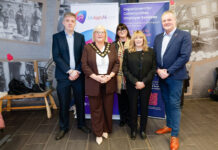
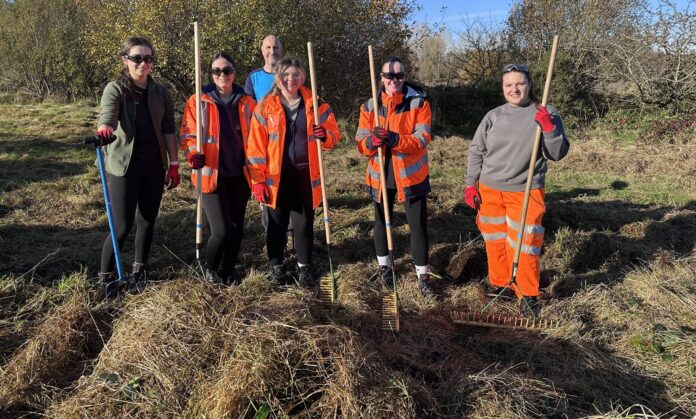
A recent volunteer event has taken place with officers from Armagh City, Banbridge & Craigavon (ABC) Borough Council working in partnership with Amey consultants to maintain the Craigavon Lakes Nature Reserve and help local wildlife.
ABC Council’s Conservation Service staff worked in partnership with Amey volunteers to cut back scrub in the area to help maintain and improve the reserve for locally important plant and animal species. Native scrub species occur abundantly on the reserve; however, excessive scrub encroachment can have a detrimental impact on the habitat, including the native plant and invertebrate species they support.
The scrub must be managed through appropriate control measures to help plants which can be found here include Ox-eye Daisy, Common Spotted Orchid, Birds Foot Trefoil, Sweet Vernal Grass and Knapweed.
Several species of particular importance can also be seen here including Bee Orchids. The land in this part of the Reserve has had large quantities of limestone waste deposited on it in the past creating conditions which are ideal for the growth of Bee Orchids.
The diverse range of plants which are present in this area attracts a variety of insects and butterflies. These include butterflies such as the Common Blue, Small Heath, Small Tortoiseshell and occasionally the Clouded Yellow. The large day flying Narrow Bordered Five-spot Burnet Moth with its dramatic colouration can frequently be seen.
One of the most important species of butterfly which can be found on the site is the Cryptic Wood White butterfly. The largest population of this butterfly in Ireland can be found at Craigavon Lakes. It breeds in open habitats such as rough grassland, areas of light scrub, flower rich meadows, and road verges, all of which can be found within the Nature Reserve at Craigavon Lakes. Plants such as Birds Foot Trefoil and Tufted Vetch act as food plants and sites on which the butterflies lay their eggs.
Amey, who are the consulting engineers for the Department for Infrastructure’s (DfI’s) Black Paths Active Travel Signature Scheme, provided 11 volunteers to help with the work. The volunteers recently helped remove cut hay on the nature reserve and this event was a follow-up to that successful event.
ABC Council is delighted to be working in partnership with Amey on this project. The Council already have more events planned in the coming months to continue this successful partnership work.