
ABOUT US
Local Resilience Team
The Local Resilience team is hosted by Armagh City, Banbridge and Craigavon Borough Council. The team works with many partners at a local level across Northern Ireland to help improve the resilience of Northern Ireland and to ensure a co-ordinated response to emergencies that could have a significant impact on communities.
The Local Resilience team is involved in the preparation for, response to and recovery from many civil emergencies, ranging from severe weather, environmental, social and accidental.
The team works under the remit of the Northern Ireland Civil Contingencies Framework, Building Resilience Together, which sets out the Northern Ireland arrangements for effective emergency management. The entirety of the Civil Contingencies Act 2004 does not apply to Northern Ireland however The Northern Ireland Civil Contingencies Framework provides regional cohesion for all agencies to work together by common acceptance of its principles and guides.
The team project manages the three multiagency Emergency Preparedness Groups in Northern Ireland. These groups, which have many partners, have the overarching aim to work together to ensure that, if and when an emergency occurs, they are prepared to respond together and minimise any impact. The team works closely with many partner organisations across Northern, in Ireland and across the UK.
From severe weather to cyber attacks, emergencies can disrupt the services you rely on. Being ready for 3 days helps you manage while support reaches those in need.
Be Ready
Ready to Act. Responding Together. Across the UK, communities are at the heart of emergency response. Here you’ll find the tools you need to help your community prepare.
Ready Together | Tools to help communities prepare for emergencies
‘5 Steps to Be Ready’ Campaign
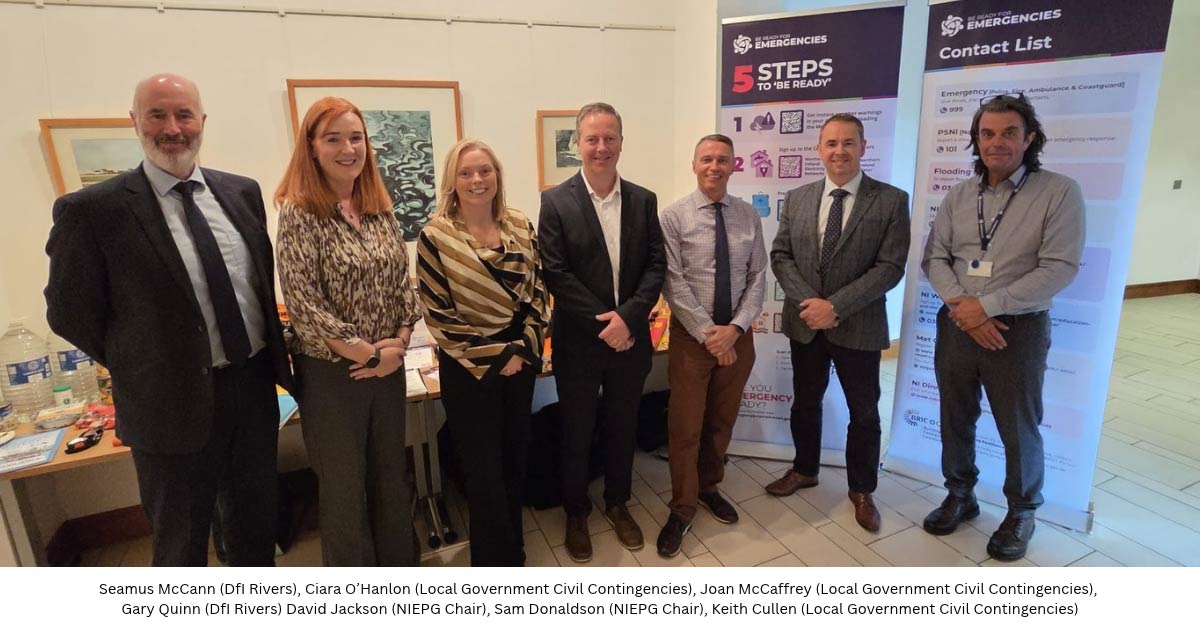
The Building Resilience in Communities (BRIC) project funded by the DfI Rivers Agency officially launched a new ‘5 Steps to be Ready’ campaign on the 22nd September 2026 at the N.I. Emergency Preparedness Group (NIEPG) meeting.
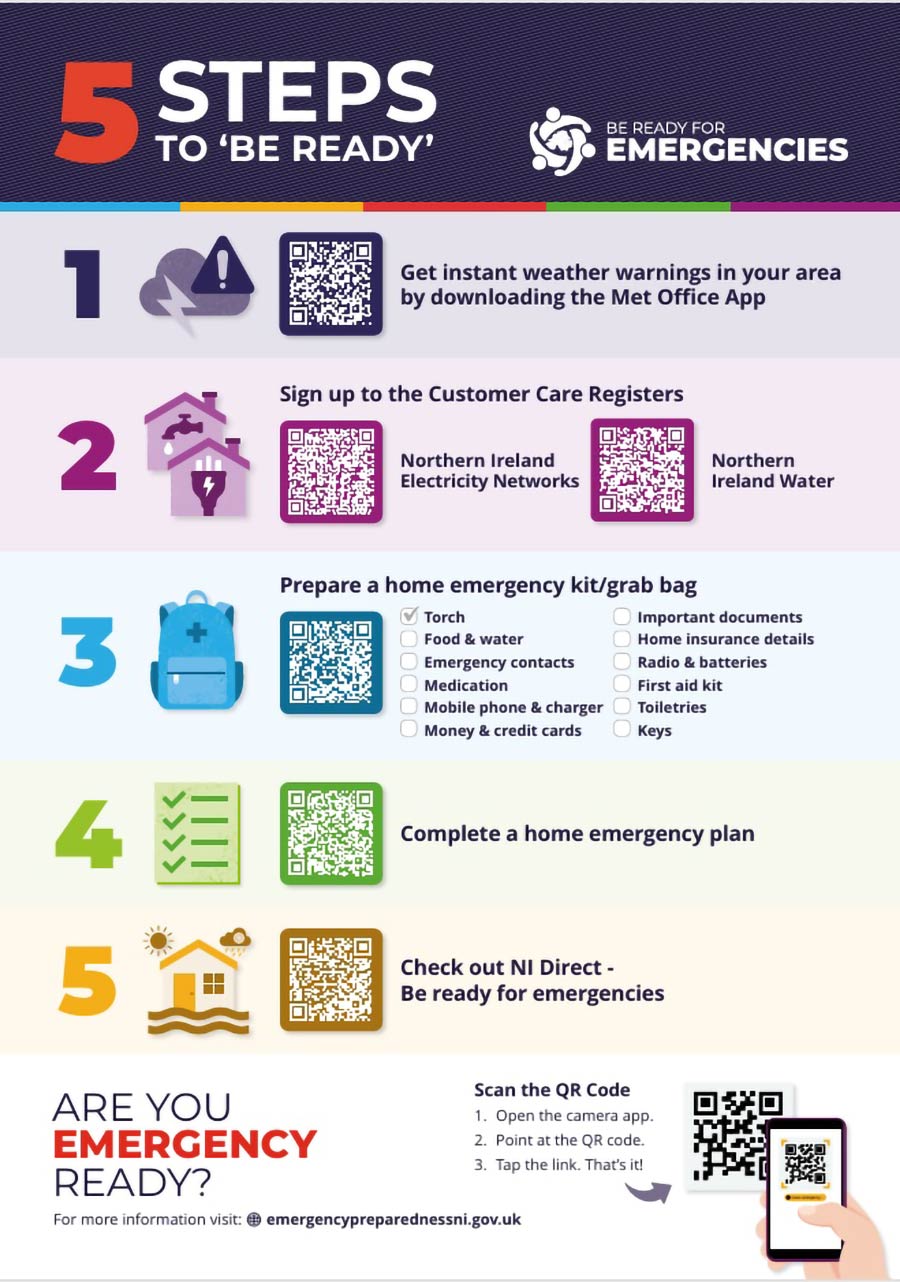
The regional campaign highlights five actionable steps that households and communities can take.
The five steps are:
- Registering for Met Office weather warnings;
- Registering for NI Electricity Networks (NIE) and NI Water (NIW) Customer Care Registers;
- Preparing a Home Emergency Kit/ Grab Bag;
- Creating a Home Emergency Plan; and
- Refer to ‘Be Ready for Emergencies’ on NI Direct for further advice and information.
The campaign is based on best practice from Local Resilience Fora in England and Scotland. It complements the existing information provided by all our partners and captures clear and concise information in one document. It has been adapted and developed in collaboration with our partners across all sectors in Northern Ireland and especially members of the public who expressed their opinion on the 5 Steps ‘to be ready’ approach and messaging.
Gary Quinn, Rivers Operations Director, said: “DfI Rivers is pleased to support the Building Resilience in Communities project, which is helping communities across Northern Ireland to better understand local flood risk, prepare for emergencies and take practical steps to protect themselves, their families and their property”.
The regional campaign will be promoted as part of the #BeReadyNI Campaign during September as Preparedness month.
The Community Resilience Officers will continue to deliver information sessions and workshops focusing on household and community resilience across the region.
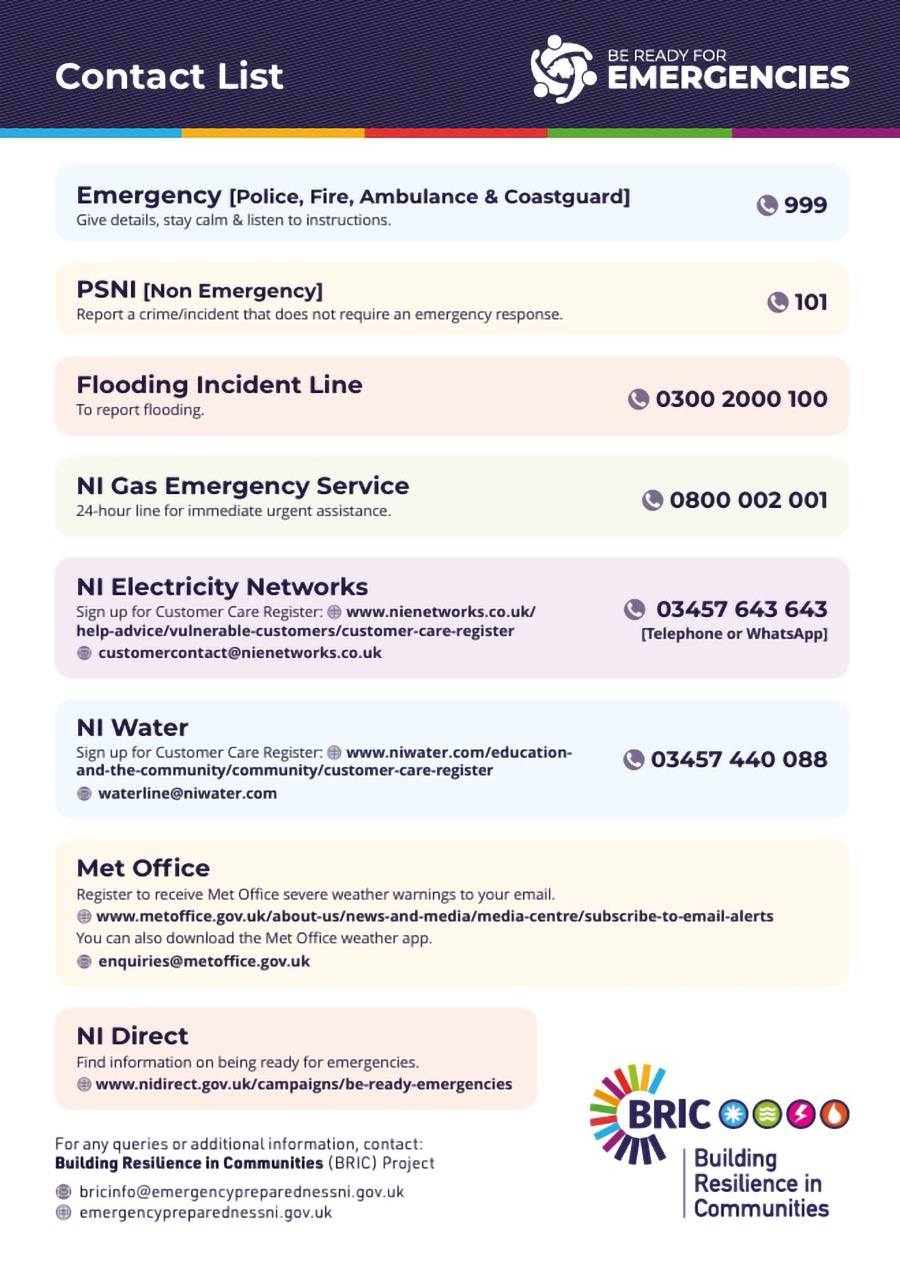
#BeReadyNI – How ready are you?
September is Preparedness month and since 2015, it has been promoted through the #30Days30WaysUK campaign and associated #BeReadyNI campaign. The campaigns are focused on emergency planning and increasing levels of personal resilience.
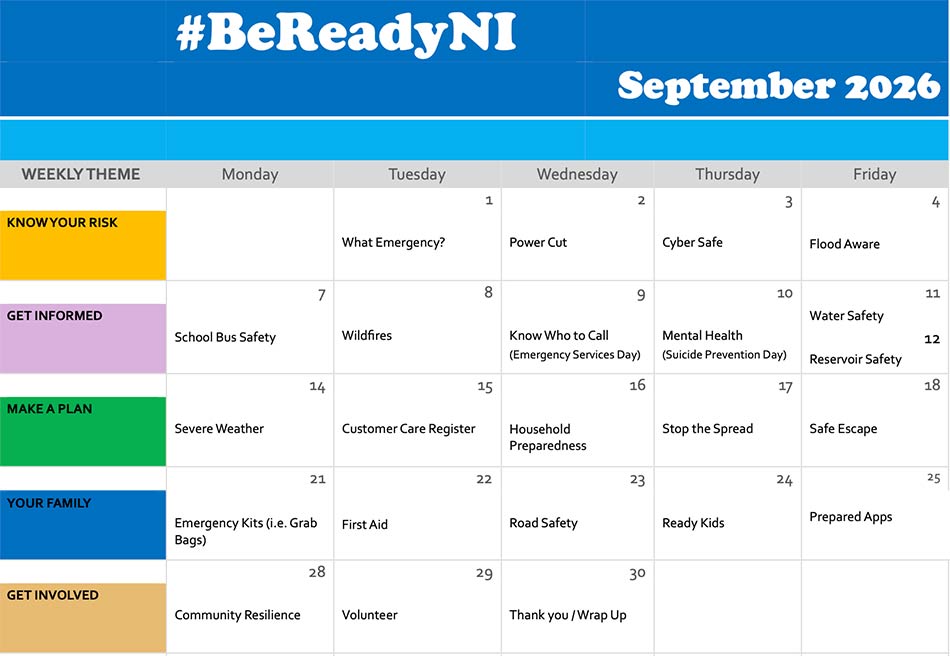
In Northern Ireland, a wide-reaching social media campaign is undertaken throughout the month of September under the banner of #BeReadyNI. All partner agencies get on board to push out and promote key personal resilience messaging across all hazards, according to weekly and daily themes. You may have noticed the campaign if you follow any of the public agencies locally. If not, please keep an eye out on social media for the ‘Be Ready for Emergencies’ banner above and share posts widely. Remember preparedness isn’t just an idea for September – it’s a whole-community effort and we need the whole community to get involved! Whether it’s checking in on a vulnerable neighbour, planning an escape route or having a grab bag ready, your actions today could leave you better prepared to face any emergencies you may have to deal with.
The calendar below will give you a flavour of the messaging we’ll be pushing out in September 2026 – how many messages did you spot? And more importantly, how many have you acted on?
NI EMERGENCY PREPAREDNESS GROUP RESILIENCE STRATEGY 2025-2030
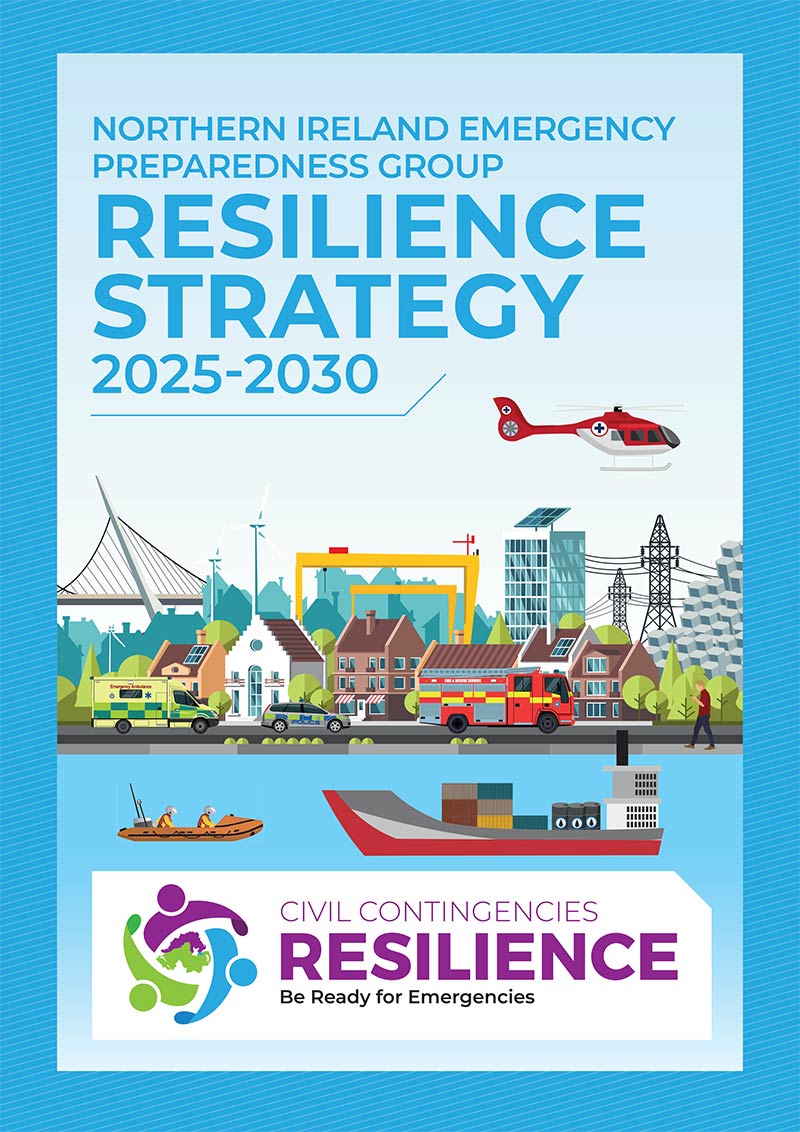
The team published the 2025-30 Northern Ireland Emergency Preparedness Group Resilience Strategy in June 2025. The strategy is underpinned by a series of strategic priorities informed by consultation with stakeholder organisations involved in emergency management preparedness, response and recovery. These priorities will direct the focus, energy and effort of the Northern Ireland Emergency Preparedness Group (NIEPG) over the next five years in pursuit of its vision and core mission, namely:
OUR VISION: The NIEPG Resilience Strategy 2025 – 2030 will provide the delivery mechanism for local resilience in NI, building on existing relationships to further co-operation and ensure the region is best prepared to deal with potential risks and respond to emergency situations.
OUR MISSION: To build a resilient Northern Ireland through co-ordinated emergency planning and management which puts people and communities at the centre of a civil contingencies response.
To find out more, watch this animation which briefly outlines our new strategy and how we are building a more resilient Northern Ireland together.
EMERGENCY PREPAREDNESS GROUP RESOURCES
LINKS FOR USEFUL RESOURCES
The Executive Office, Civil Contingencies Division: Civil Contingencies | The Executive Office
NI Direct: Be Ready for Emergencies: Be ready for emergencies | nidirect
From severe weather to cyber attacks, emergencies can disrupt the services you rely on. Being ready for 3 days helps you manage while support reaches those in need.
Be Ready
Ready to Act. Responding Together. Across the UK, communities are at the heart of emergency response. Here you’ll find the tools you need to help your community prepare.
Ready Together | Tools to help communities prepare for emergencies
Regional Community Resilience Groups Be Weather Ready Ezine: Getting Weather Ready – the Regional Community Resilience Group Newsletter | Department for Infrastructure
CONTACT US